Revolutionizing Resource Management: The Future of Agricultural Drone Service in Michigan
As Michigan’s agricultural landscape evolves, integrating technology into traditional practices has become essential for sustainable growth. Precision Drone LLC stands at the forefront of this transformation, offering revolutionary agricultural drone services that promise to redefine resource management across the state. Through precision monitoring and targeted applications, our drones provide farmers and conservationists with the tools necessary to optimize crop health and manage natural resources effectively. These advancements not only enhance productivity but also promote sustainability, ensuring that Michigan’s rich agricultural heritage thrives well into the future. In this post, we delve into how our innovative solutions are shaping the future of agriculture drone services, including insights into pricing and the tangible benefits they offer to the industry.
## Transforming Agriculture with Drones
As technology progresses, the landscape of agriculture is transformed, allowing for more efficient and sustainable practices. Drones have become a pivotal tool in this evolution, offering advanced capabilities that go beyond traditional methods. Here, we explore how drones are revolutionizing agriculture through precision monitoring, targeted applications, and innovative surveying technologies.
### Precision Monitoring Innovations
**Precision monitoring** is the cornerstone of modern agricultural practices. Drones equipped with high-resolution cameras and sensors can capture detailed images of crops, allowing farmers to monitor plant health in real-time. This *granular data* helps in identifying issues such as pest infestations or nutrient deficiencies early on, enabling timely interventions.
Drones provide valuable insights into crop health through **multispectral imaging**, which reveals details invisible to the naked eye. This technology allows for a comprehensive understanding of vegetation health, ensuring that crops receive optimal care.
Moreover, precision monitoring enables *variable rate technology*, adjusting inputs like fertilizers and water according to the specific needs of different crop areas. This reduces waste and enhances productivity.
### Targeted Applications and Benefits
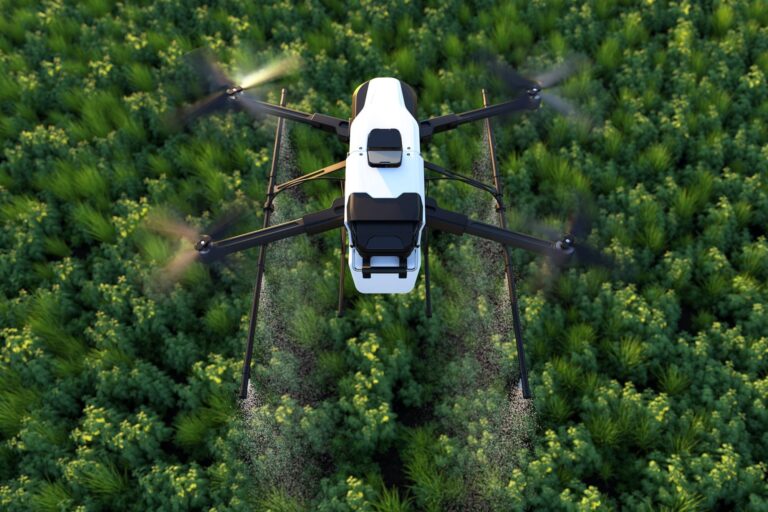
Drones offer **targeted applications** that benefit both productivity and sustainability. They can accurately apply fertilizers, pesticides, and herbicides, minimizing environmental impact by reducing chemical use.
**Benefits** include increased operational efficiency, as drones cover large areas quickly and accurately. This not only saves time but also reduces labor costs, contributing to a more sustainable agriculture model.
Additionally, targeted applications improve crop yields by ensuring that resources are used where needed most. This targeted approach enhances *overall farm profitability* while maintaining environmental stewardship.
### Surveying and Mapping Technologies
**Surveying and mapping technologies** provided by drones are essential tools for modern agriculture. These capabilities allow for detailed topographical mapping, helping farmers understand the landscape’s intricacies.
Using **LiDAR and photogrammetry**, drones create accurate 3D models of fields. These models assist in planning irrigation systems and identifying areas prone to flooding or erosion.
*Digital elevation models* (DEMs) generated by drones enhance resource management. They provide insights into field variations, supporting better decision-making for planting and harvesting strategies.
## Enhancing Resource Management
Resource management is critical in agriculture, and drones play a significant role in this arena. By optimizing crop health and supporting sustainable practices, drones enhance resource management effectively. This section delves into how these technologies contribute to better agricultural outcomes.
### Optimizing Crop Health
**Optimizing crop health** is vital for maximizing yields and ensuring sustainability. Drones help achieve this by providing detailed data about crop conditions, allowing for informed decisions.
*Through regular monitoring*, drones detect stress factors early, such as water scarcity or pest attacks. This early detection aids in implementing corrective measures promptly.
Furthermore, drones facilitate **precision agriculture**, where inputs are tailored to specific crop needs. This targeted approach improves plant health and boosts productivity.
### Sustainable Natural Resource Management
**Sustainable natural resource management** is a key focus for agriculture, ensuring long-term productivity. Drones contribute by offering insights that support sustainable practices.
*By analyzing soil data* and weather patterns, drones help optimize resource use, reducing the environmental footprint. They guide irrigation and fertilization to align with crop requirements, minimizing wastage.
Moreover, drones support **conservation efforts** by monitoring and protecting natural habitats, ensuring that farming coexists harmoniously with nature.
### Integrating Technology in Conservation
**Integrating technology in conservation** efforts is crucial for balancing agricultural productivity with environmental preservation. Drones play a pivotal role in this integration.
*Drones equipped with thermal cameras* monitor wildlife and vegetation, providing data for conservation planning. This helps maintain biodiversity while supporting agricultural needs.
Additionally, drones assist in **reforestation projects**, identifying areas suitable for tree planting. This contributes to carbon sequestration and soil restoration, promoting sustainability.
## Agricultural Drone Service in Michigan
Michigan’s agricultural sector benefits immensely from drone services, which offer local impact and foster opportunities. These technologies support the environmental sector and are backed by successful case studies, showcasing their potential.
### Local Impact and Opportunities
Drones have a profound **local impact and create opportunities** within Michigan’s agriculture. They aid in precision farming, enhancing productivity and sustainability.
*By reducing operational costs*, drones make agriculture more profitable. This attracts investment and fosters economic growth within the region.
Furthermore, drone services provide **employment opportunities** in tech-driven roles, promoting skills development and supporting the local economy.
### Supporting the Environmental Sector
The **environmental sector** in Michigan gains significant advantages from drone technology. Drones assist in monitoring ecosystems, ensuring that agricultural practices do not harm the environment.
*Through comprehensive data collection*, drones support environmental assessments, guiding sustainable land management practices.
Moreover, drones play a role in **habitat restoration projects**, aiding in the monitoring and maintenance of natural areas, promoting ecological balance.
### Case Studies and Success Stories
Numerous **case studies and success stories** highlight the efficacy of drones in Michigan’s agriculture. These examples demonstrate tangible benefits and encourage broader adoption.
*In one case study*, a Michigan farm increased yields by 20% using drone data for precision planting. This led to significant financial and environmental benefits.
– Improved crop health through targeted interventions.
– Enhanced resource efficiency, reducing costs.
– Increased awareness and adoption of sustainable practices.
## Understanding Agriculture Drone Services Pricing
Understanding the **pricing of agriculture drone services** is essential for making informed investment decisions. This section covers cost factors, investment benefits, and comparisons of service packages.
### Cost Factors and Considerations
Several **cost factors** influence the pricing of drone services in agriculture. These include equipment costs, software licensing, and labor for operating and maintaining drones.
*Operational costs* vary depending on the scale and complexity of the services provided. More advanced services, such as multispectral imaging, may incur higher costs.
Moreover, **regulatory compliance** adds to the costs, as operators must adhere to guidelines and obtain necessary permits to fly drones legally.
### Investment Benefits and ROI
Investing in drone services offers significant **benefits and returns on investment (ROI)** for agriculture. The initial costs are offset by long-term savings and productivity gains.
*ROI is enhanced* through increased crop yields and reduced input costs. Drones ensure that resources are used efficiently, maximizing profitability.
Additionally, **improved decision-making** from data insights leads to better farming outcomes, further boosting the ROI of drone technology.
### Comparing Service Packages
When considering drone services, it is essential to **compare service packages** to find the best fit for your needs. Packages vary in terms of services offered and pricing.
| Package Type | Services Included | Cost Range |
|——————|——————————————-|—————-|
| Basic | Aerial imaging, basic analysis | Low |
| Intermediate | Multispectral imaging, detailed reports | Medium |
| Premium | Full analytics suite, custom applications | High |
*Choosing the right package* depends on your specific agricultural requirements and budget.
## The Future of Drone Technology
The future of drone technology in agriculture promises exciting advancements. Emerging trends, innovations on the horizon, and preparations for these technological advancements are explored in this section.
### Emerging Trends in Agriculture
Several **emerging trends** are shaping the future of drones in agriculture. These include advancements in AI, machine learning, and data analytics.
*AI-driven drones* can autonomously analyze data, offering predictive insights for better farm management. This trend is set to revolutionize precision agriculture.
Additionally, **collaborations with IoT devices** enhance data collection and resource management, providing a comprehensive overview of farm operations.
### Innovations on the Horizon
Several **innovations are on the horizon** for drone technology, promising further enhancements in agricultural practices. These include advanced sensors and automated systems.
*Drones equipped with hyperspectral sensors* will provide deeper insights into crop health, enabling even more precise interventions.
Moreover, **autonomous drones** capable of performing complex tasks without human intervention are expected to significantly reduce labor costs and improve efficiency.
### Preparing for Technological Advancements
Preparing for **technological advancements** in drones requires strategic planning and investment. Farmers must stay informed and adopt new technologies to remain competitive.
*Training and education* are crucial for integrating these advancements into agricultural practices, ensuring that farmers can fully utilize the capabilities of drones.
Additionally, **collaborating with tech providers** ensures access to the latest innovations and support, facilitating seamless transitions to new technologies.
{source=”unsplash” unsplashQuery=”drones, agriculture, technology, precision farming, crop monitoring, sustainable practices, aerial imaging, resource management, surveying, mapping, innovation, farming tools, environmental impact” unsplashId=”VTXw4_5SsNA”}